Rock on Fingers: A Designer’s Review for Craft Fair Success
As an embroidery designer who has spent countless hours behind the hoop and even more time standing behind a booth table at weekend markets, I have learned that not all designs are created equal. Some look beautiful on a screen but vanish in person. Others are so dense they ruin your fabric. Today, I am putting Rock on Fingers under the microscope. This is not just a theoretical review; this is a practical assessment of how this specific machine embroidery design performs when you need to turn thread into profit.
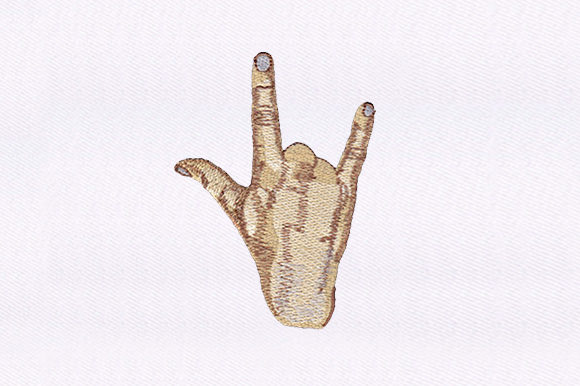
The title alone suggests attitude. "Rock on" implies energy, rebellion, and fun, while "Fingers" hints at the iconic hand gesture. For the Boys category, this is a strong thematic fit, but its appeal extends far beyond gender. It is about personality. When I first loaded the digital embroidery file into my software, my immediate impression was that this design leans bold and modern. It does not whisper; it shouts. In a sea of farmhouse florals and delicate script, a design with this kind of visual punch can be the anchor that draws customers to your table.
First Impressions and Visual Impact
When evaluating a new asset for my shop, I ask myself: Does it read clearly from three feet away? At a craft fair, you have seconds to capture attention. Rock on Fingers succeeds here because the silhouette is universally recognized. Whether stitched in vibrant neon threads or classic black and white, the shape communicates instantly. It feels less like traditional decorative embroidery and more like a statement piece. This makes it ideal for customers looking for something unique rather than generic.
The design’s strength lies in its simplicity. Complex shading often gets lost on textured fabrics, but bold lines hold their ground. This makes it a versatile choice for various handmade products. However, simplicity does not mean easy. The spacing between elements is critical. If the fingers are too close together, they may merge during stitching, especially on plush fabrics. As a designer, I appreciate when a file is optimized for clarity, and this concept demands high contrast to work effectively.
Product Applications for Maximum Sales
To truly test the viability of Rock on Fingers, we must imagine it on actual goods. Here is where this design shines as a craft fair product.
- Tote Bag Design: A canvas tote is the perfect canvas for this graphic. Placed centrally, it transforms a basic bag into a trendy accessory. The durability of the stitch holds up well against the weight of groceries or books.
- Apron Embroidery: For a boutique maker, adding this to a denim or canvas apron creates a fun, edgy kitchen vibe. It appeals to young adults and teens who want personality in their home goods.
- Tea Towel Embroidery: This is tricky. Tea towels have a loose weave. You must ensure the stitch density is appropriate so the towel does not pucker. If executed correctly, it makes for a hilarious and giftable item.
- Embroidered Patch: This might be the highest margin item. Patches allow customers to customize their own jackets or bags. Because the design is self-contained, it cuts cleanly and applies easily with heat-seal backing.
- Caps and Hats: Curved surfaces are challenging. The design must be scaled down significantly to fit the front panel of a cap without distorting. Check your hoop size limitations before committing to bulk production.
For Etsy sellers and small shop owners, these applications provide diverse listing opportunities. You are not just selling one item; you are selling a lifestyle brand centered around fun and individuality.
Production Realities and Technical Notes
Before you run this design on your commercial embroidery machine for a hundred units, there are practical considerations. The provided file formats—10O, ART, CND, DSB, DST, DSZ, EXP, HUS, JEF, PCS, PEC, PES, TAP, VIP, VP3, XXX—offer incredible compatibility. Whether you use Brother, Janome, Husqvarna, or Bernina, you have a native format ready to go. This versatility is a huge plus for designers who switch machines or outsource production.
However, format compatibility does not guarantee stitch quality. You must check the stitch density. Dense areas can cause needle breaks or thread bunching, particularly if you are using metallic or rayon threads. I recommend running a test stitch on scrap fabric that matches your final product. Pay attention to the thread colors. High contrast is key. A dark thread on dark fabric will render the design invisible. Always create a printable mockup or a physical sample to verify visibility.
Stabilizer choice is non-negotiable. For stretchy fabrics like t-shirts or thin cottons, a cut-away stabilizer provides the necessary support to keep the "fingers" distinct. On stable fabrics like canvas or denim, a tear-away may suffice, but always test first. Fabric texture also plays a role. On terry cloth towels, the pile can hide fine details. Ensure the outline stitches are thick enough to stand out above the texture.
Marketing and Brand Consistency
From a marketing perspective, Rock on Fingers helps build a cohesive brand identity. If your booth features bold, graphic designs, this fits perfectly. It attracts a specific demographic: those who appreciate humor and edge. Use this to your advantage in your Etsy listings and social media. Show the design in action. A video of the machine stitching the outline can be mesmerizing and drives engagement.
Remember, this is a Boys category product by classification, but do not limit yourself. Fashion is fluid. A teen girl might love this on a backpack just as much as a boy would on a hoodie. Market it based on attitude, not just age. When creating your digital embroidery file listings, highlight the ease of use and the variety of formats. Buyers want to know they can open the file immediately without conversion headaches.
Final Verdict for the Handmade Entrepreneur
Is Rock on Fingers worth your time and thread? Absolutely, but with caveats. It is not a subtle, elegant floral. It is a loud, proud statement. If your brand is soft, rustic, or minimalist, this might clash. But if you are aiming for modern, fun, and youthful, it is a winner. It photographs well because the shapes are clean and recognizable even in thumbnail images on mobile devices.
Ensure you confirm commercial licensing before selling finished products. Most designers allow it, but always read the terms. Once cleared, batch production is feasible because the design is likely quick to stitch due to its graphic nature. Keep an eye on registration marks if you are combining it with other elements.
In the competitive world of handmade markets, standing out is half the battle. Rock on Fingers gives you a tool to do just that. It turns a plain item into a conversation starter. Test it, tweak your tension, choose your colors wisely, and watch it become a staple in your booth. The key to success in embroidery is not just having the machine, but having the right design for the right product. This design, when applied correctly, delivers both style and substance.