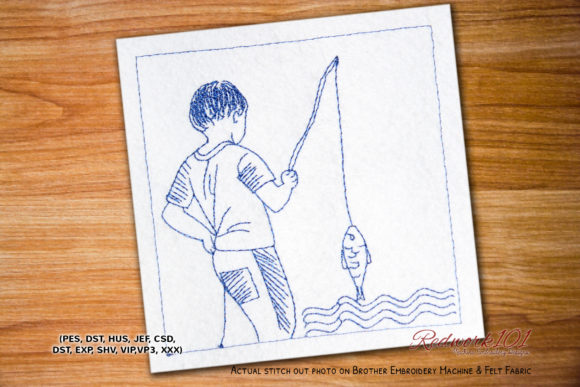
Fisherman with Rod and Fish Redwork Review
As an embroidery designer who has spent countless weekends behind a craft fair table, I know that the difference between a browsing customer and a buying customer often comes down to visual clarity. When I first loaded the Fisherman with Rod and Fish Redwork onto my machine for testing, my immediate thought was about its versatility. This is not just a digital file; it is a potential revenue stream for your small shop product line. The redwork style, traditionally known for its single-color simplicity, offers a rustic charm that fits perfectly within the Camping and outdoor lifestyle niche.
First Impressions and Aesthetic Appeal
The initial glance at this design reveals a clean, classic silhouette. It feels undeniably rustic and farmhouse-ready, yet it possesses a minimal elegance that prevents it from looking cluttered. For craft fair sellers, this is crucial. Customers walking past your booth have seconds to register what they are seeing. A busy, overly complex design can get lost in the noise of a crowded market, but the bold lines of the fisherman and his catch stand out immediately.
The description notes that the Box Stitch shown in pictures is optional and that the outer box color is often different or skippable. This is a significant advantage for us as creators. It means we are not locked into a rigid frame. We can let the design breathe on the fabric, making it feel more organic and less like a stamped logo. This flexibility allows the piece to transition seamlessly from a decorative home item to a wearable accessory.
Product Applications for Maximum Sales
When evaluating where this machine embroidery design will perform best, I look at high-traffic items that customers love to impulse buy. Here is how I see this design functioning across various products:
- Tote Bag Design: This is arguably the strongest application. A canvas tote with a large, centered redwork fisherman appeals to anglers, nature lovers, and anyone who appreciates handmade quality. The single-color thread keeps production costs low while maintaining high visual impact.
- Apron Embroidery: Imagine a heavy-duty canvas apron for the grill master or the kitchen enthusiast. Placing the design on the bib or the lower corner adds a touch of personality without overwhelming the garment. It turns a utility item into a giftable handmade product.
- Tea Towel Embroidery: Kitchen linens are staples at craft fairs. The redwork style looks exceptional on flour sack towels. The contrast of red thread against white or cream fabric is timeless and photographs beautifully for online listings.
- Embroidered Patch: If you offer patches, this design is ideal. The clear outlines ensure that even at a smaller size, the fisherman and rod remain recognizable. It is perfect for iron-on applications for jackets or hats.
- Caps and Hats: While curved surfaces can be tricky, a simplified version of this design works well on the front panel of a baseball cap. It appeals directly to the Camping demographic.
Production Practicality for Etsy Sellers
For the Etsy seller or digital embroidery file vendor, repeatability is key. You need designs that are quick to hoop, quick to stitch, and forgiving of minor fabric variations. The Fisherman with Rod and Fish Redwork excels here. Because it relies on outline stitches rather than dense fill areas, it produces quickly. This means you can batch produce twenty tote bags in the time it might take to stitch two heavily filled jackets.
Furthermore, this design is a dream for creating a printable mockup. Since the lines are distinct, you can easily overlay the design onto product photos to create compelling design assets for your social media marketing. This helps buyer engagement before they even visit your shop.
Navigating Technical Challenges
While the design is straightforward, there are careful-use notes every commercial embroidery professional should consider. First, pay attention to stitch density. Even in redwork, if the lines are too close together, they can pull the fabric. Always test the design on scrap fabric that matches the weight of your final product.
Fabric texture plays a massive role in the final look. On smooth cotton, the lines will be crisp. On textured towels or thick denim, the thread may sink slightly. To combat this, use the right stabilizer. A cut-away stabilizer is often safer for items that will be washed frequently, like tea towels and tote bags, ensuring the design retains its shape over time.
Another consideration is the hoop size. Ensure you confirm the hoop size compatibility before purchasing or producing. If the design is large, you may need a 5x7 or larger hoop. If you plan to shrink it for a pocket emblem, check that the tiny details, such as the fishing line or the fish scales, do not lose clarity. Small lettering or intricate details can disappear if the design is scaled down too aggressively.
Enhancing Brand Consistency and Value
Using a cohesive design like this helps build brand consistency. If your boutique makers' brand focuses on outdoor living, rustic decor, or handmade gifts, this design reinforces that narrative. It signals to the customer that you understand their lifestyle. When a customer sees a well-executed embroidered patch on a market bag, they perceive higher value. They are not just buying a bag; they are buying a piece of art that reflects their identity.
The optional box feature mentioned in the product description allows for further customization. If you want a more framed, traditional look, include the box. If you prefer a modern, floating aesthetic, skip it. This adaptability means you can offer variations of the same finished product, appealing to different tastes without needing entirely new design assets.
Final Designer Notes for Success
Before you list this as a craft fair product or add it to your commercial embroidery portfolio, take these steps:
- Test Thread Contrast: Red is traditional, but have you tried navy on khaki? Or forest green on cream? Experiment with thread colors to see what pops best against your standard fabric inventory.
- Inspect Stitch Density: Run a test stitch-out. Look for any areas where the thread bunches or where the fabric puckers. Adjust tension if necessary.
- Create Real Mockups: Do not rely solely on digital previews. Stitch one real sample on a tote and one on a towel. Photograph them in natural light. These images will convert better than any generic graphic.
- Confirm Licensing: Always verify the license terms of the digital embroidery file. Ensure you have the rights to sell finished products commercially. This is non-negotiable for professional business owners.
In conclusion, the Fisherman with Rod and Fish Redwork is a strong contender for any maker looking to expand their Camping or rustic-themed collection. It balances aesthetic appeal with production efficiency. By focusing on high-quality materials and precise stitching, you can turn this simple design into a standout item that draws customers to your booth and keeps them coming back to your online store. It is a reminder that in the world of Embroidery, sometimes the simplest lines tell the most compelling stories.